Characteristics of Double-Row Angular Contact Ball Bearings for Automotive Applications
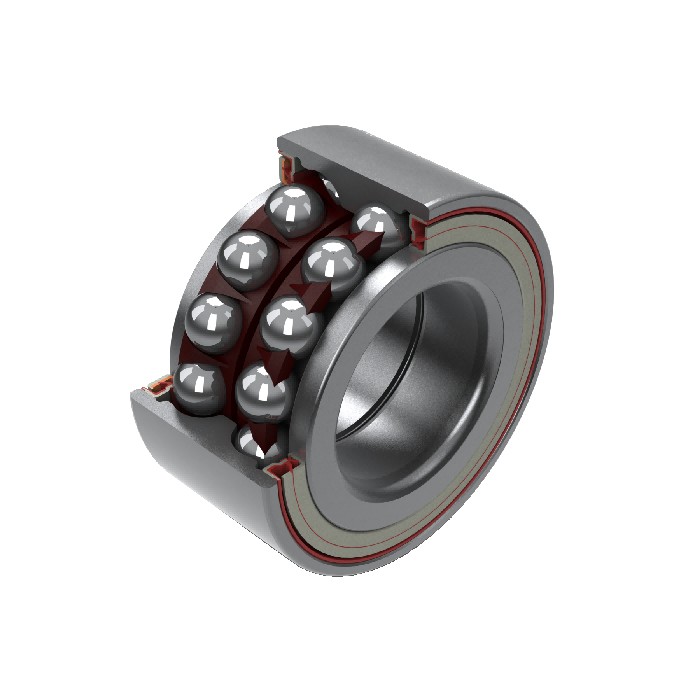
Double-row angular contact ball bearings are precision components engineered to meet the demanding requirements of modern automotive systems, especially in wheel hub applications. Their key characteristics include:
High Radial and Axial Load Capacity: Designed to withstand combined loads, they efficiently support both the radial loads (vehicle weight) and bidirectional axial loads (cornering forces) encountered during driving.
High Rigidity and Overturning Moment Resistance: The double-row design and predefined contact angle (typically 30° or 40°) create a very rigid bearing arrangement. This is critical for resisting the overturning moments caused by cornering, braking, and uneven road surfaces, ensuring precise wheel alignment and stability.
Integrated and Non-Separable Design: As a single, pre-adjusted unit, these bearings are non-separable. This simplifies installation, ensures optimal preload for maximum performance and longevity right from the start, and guarantees consistent precision within the assembly.
Compact and Space-Saving: The integrated double-row design provides the functionality of two single-row bearings in a more compact package, helping to save space in the vehicle's hub assembly, which is often a constrained area.
Optimized for High Performance: They are specifically designed for applications requiring high rigidity, accurate rotational accuracy, and minimal deflection, making them indispensable for safety-critical systems like wheel hubs.
Widespread Application: Their robust characteristics make them the preferred bearing choice for the front wheel hubs of passenger cars, where performance and reliability are paramount.
In summary, these bearings are valued for their strength, rigidity, integrated design, and ability to enhance vehicle handling and safety.